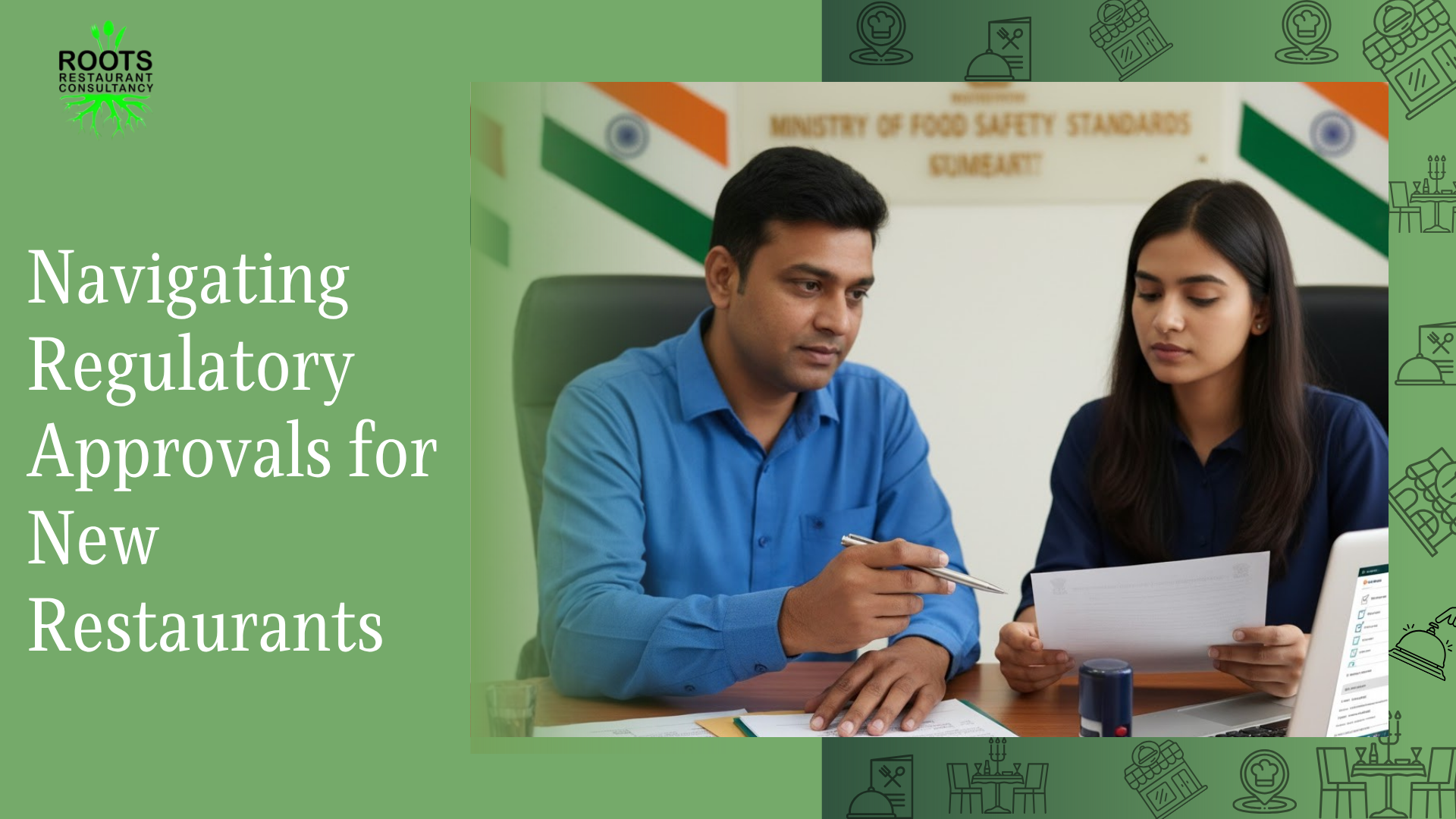
Launching a restaurant requires multiple permissions from both central and local authorities. Below are the most common and critical ones that an Indian restaurant consultant helps manage.
1. FSSAI License (Food Safety and Standards Authority of India)
This license certifies that your establishment meets India’s food safety regulations.
- Who Needs It: All restaurants, cafés, cloud kitchens, bakeries, and catering services.
- Documents Required:
- Proof of business ownership
- Kitchen layout
- List of food items
- NOC from local municipality
- Validity: 1–5 years
A consultant ensures accurate submission and renewal to avoid license suspension.
2. Shop and Establishment Act Registration
Mandatory for every commercial establishment, this license defines working hours, employee safety, and wages.
Your Indian restaurant consultant handles documentation and registration with local municipal authorities.
3. GST Registration
Restaurants exceeding ₹20 lakhs in annual turnover must register for GST.
Consultants coordinate with accountants and GST officers to streamline the process and ensure accurate tax categorization for dine-in vs. delivery models.
4. Trade License from Local Municipality (e.g., BBMP, PMC, NDMC)
This license ensures your restaurant follows local civic and health regulations.
It involves kitchen inspection, waste management verification, and hygiene assessment.
Roots Restaurant Consultancy assists clients in applying through local municipal portals and preparing premises for inspection.
5. Fire Safety NOC (No Objection Certificate)
Fire safety is non-negotiable for restaurants. You’ll need to obtain clearance from the Fire Department after installing fire extinguishers, alarms, and emergency exits.
An Indian restaurant consultant coordinates between vendors, safety officers, and authorities to expedite approvals.
6. Pollution Control License
Restaurants generating waste, smoke, or oil discharge require a Pollution NOC from the State Pollution Control Board.
Your consultant ensures the design includes proper exhaust systems, grease traps, and waste segregation.
7. Eating House License (for Delhi, Mumbai, etc.)
Required in select metro cities, this license allows public food service operations.
Consultants help file applications with the Police Commissioner’s Office and ensure safety documentation meets requirements.
8. Liquor License (if applicable)
For bars or fine-dining restaurants serving alcohol, this is one of the most complex approvals.
Consultants help clients navigate state excise laws, age restrictions, and premise compliance to avoid costly delays.
The Process: How an Indian Restaurant Consultant Simplifies Approvals
Working with a consultant transforms what can be a months-long struggle into a structured process.
Typical Steps Include:
- Assessment & Documentation: Identifying all licenses relevant to your business type.
- Application Submission: Preparing and submitting accurate forms to each department.
- Inspection Coordination: Scheduling site visits with health, fire, and municipal officials.
- Follow-up & Clarifications: Tracking progress and handling queries from authorities.
- Approval Delivery & Renewal: Ensuring all certificates are received and renewed on time.
Roots Restaurant Consultancy manages this entire workflow through a dedicated compliance team that handles everything from FSSAI to fire safety audits.
Why You Shouldn’t Handle Approvals Alone
While online portals make license applications seem simple, small errors in documentation or layout compliance can cause major delays.
Common challenges without a consultant:
- Incorrect documentation submission
- Mismatch between layout and fire safety norms
- Missed license renewals
- Delayed inspections
- Penalties due to non-compliance
An Indian restaurant consultant eliminates these risks through expert handling, saving you time, money, and stress.
Benefits of Hiring an Indian Restaurant Consultant
1. Saves Time and Resources
Navigating multiple government departments can be overwhelming. Consultants simplify the process and reduce waiting time.
2. Ensures 100% Legal Compliance
Professionals ensure all permits and licenses meet central and local laws, minimizing future risks.
3. Smooth Coordination with Vendors
Consultants align contractors, architects, and kitchen planners to meet fire, pollution, and FSSAI requirements.
4. Avoids Costly Penalties
Even a small compliance gap can attract fines or temporary closure. Consultants help maintain uninterrupted operations.
5. Builds Trust and Credibility
Legal compliance boosts your brand’s reputation among investors, suppliers, and customers.
Beyond Licenses: Building a Strong Restaurant Foundation
A skilled Indian restaurant consultant doesn’t stop at approvals — they ensure your restaurant is operationally ready.
Additional areas of guidance include:
- Concept Development – Defining your cuisine and positioning
- Menu Engineering – Designing profitable, cost-optimized menus
- Kitchen Layout Planning – Ensuring safety and efficiency
- Staff Training & SOPs – Establishing service quality and hygiene standards
- Revenue Generation – Marketing, branding, and launch strategy
Explore Roots Restaurant Consultancy’s Full-Service Offerings for end-to-end assistance.
Case Example: Compliance Success Story
A Pune-based café owner approached Roots Restaurant Consultancy to help with pre-opening approvals. Within 45 days, the consultancy secured:
- FSSAI license
- Trade license
- Fire NOC
- Pollution certificate
- Staff hygiene SOPs
The result: a fully compliant restaurant launched on schedule, saving over ₹75,000 in potential fines.
How to Choose the Right Indian Restaurant Consultant
When selecting a consultant, consider these factors:
- Experience in Local Jurisdiction — Regional familiarity ensures smoother interactions with authorities.
- Portfolio Diversity — Consultants who’ve worked with cafés, QSRs, and fine dining projects understand varied needs.
- Transparent Pricing — Request detailed quotes outlining deliverables and government fees separately.
- Client References — Reliable consultants share case studies and past client reviews.
- Post-Launch Support — Choose firms offering ongoing operational mentoring.
Roots Restaurant Consultancy is one such partner — combining culinary creativity with regulatory expertise for 360° restaurant success.
Common Mistakes New Restaurateurs Make
Even with the best concept, neglecting compliance can cause severe setbacks. Avoid:
- Delaying license applications until after setup
- Overlooking fire or pollution permits
- Misclassifying your business under GST
- Failing to renew licenses annually
- Ignoring local health inspections
Working with an experienced Indian restaurant consultant ensures your business remains fully protected.
Long-Term Impact of Staying Compliant
A compliant restaurant not only operates legally but gains long-term stability:
- Easier access to loans or investors
- Better staff retention and morale
- Stronger brand trust among customers
- Reduced legal risks during audits
- Simplified expansion or franchising
Compliance isn’t just paperwork — it’s the backbone of a sustainable restaurant business.
FAQs on Restaurant Regulatory Approvals
Q1. How long does it take to get all restaurant licenses in India?
Typically, between 30–90 days depending on location and type of restaurant.
Q2. Is FSSAI registration enough to start a restaurant?
No. You also need a trade license, fire safety NOC, and Shop & Establishment registration.
Q3. Can consultants handle liquor license applications?
Yes. Experienced consultants coordinate with excise departments and ensure all alcohol service regulations are met.
Q4. Are restaurant approvals different for cloud kitchens?
Yes. Cloud kitchens skip dine-in permits but still require FSSAI and pollution control clearance.
Q5. How can Roots Restaurant Consultancy help me?
Roots offers end-to-end consulting for concept development, licensing, operations, and marketing. Visit their services page to learn more.