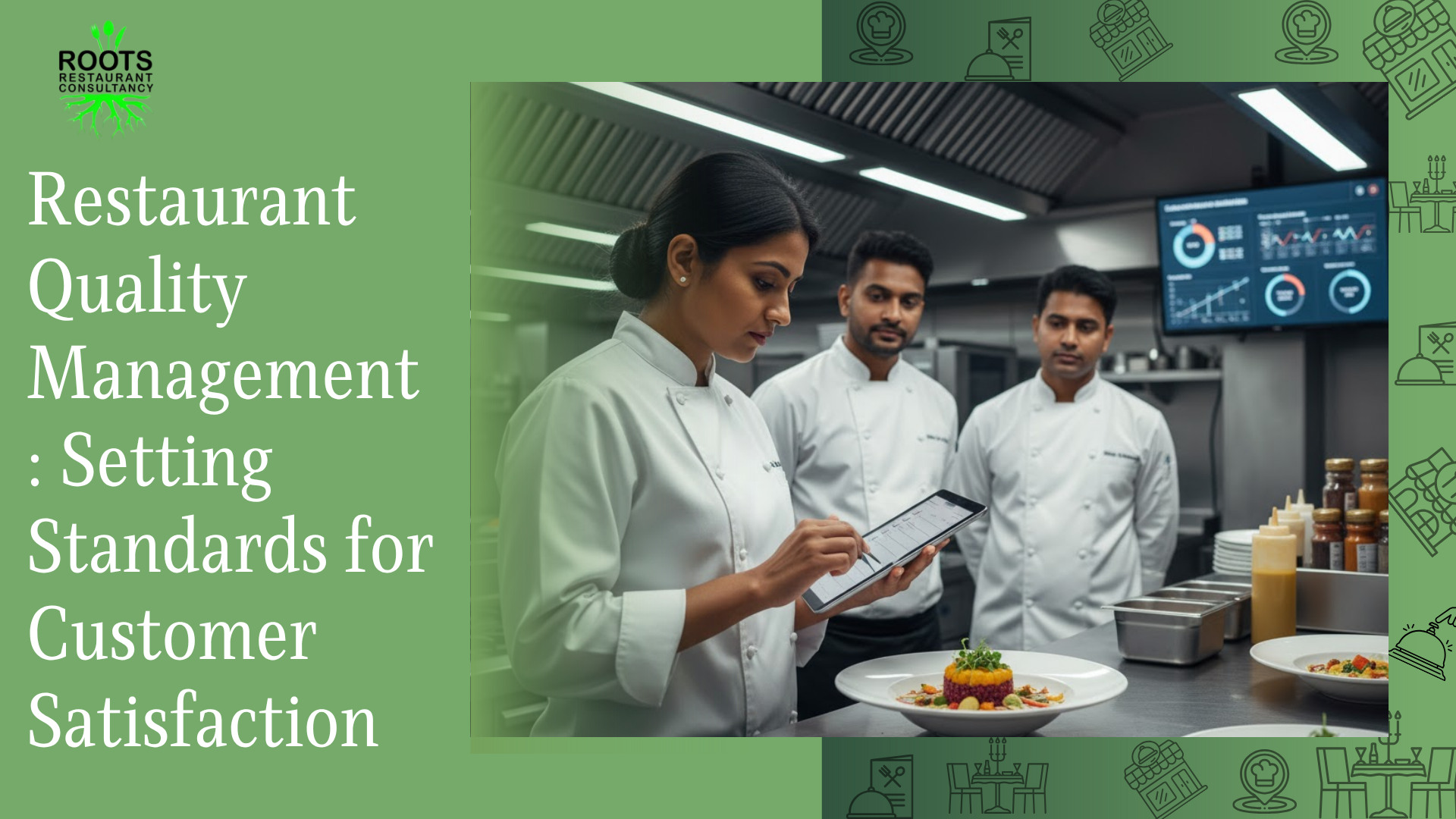
In the food and hospitality industry, restaurant quality is not just about taste — it’s about consistency, hygiene, service, and customer trust.
A single lapse in quality can damage years of reputation building.
Restaurant quality management ensures every dish served, every table cleaned, and every customer interaction meets set standards.
Whether you operate a fine-dining restaurant or a quick-service outlet, maintaining consistent quality determines your brand’s longevity and profitability.
Working with a professional consultant like Roots Restaurant Consultancy helps you build reliable quality control systems from day one — ensuring excellence across food, service, and operations.
What Is Restaurant Quality Management?
Restaurant quality management refers to the systematic approach of monitoring, evaluating, and improving all areas that affect customer satisfaction.
It covers four key dimensions:
- Food Quality – Consistency, freshness, presentation, and taste.
- Service Quality – Staff behavior, speed, and professionalism.
- Environment Quality – Cleanliness, ambience, and comfort.
- Operational Quality – Efficiency, safety, and compliance.
Together, these create the framework for customer satisfaction and brand loyalty.
Why Quality Management Is Crucial for Restaurants
1. Builds Customer Trust
Quality is what keeps guests coming back. A satisfied customer becomes a loyal brand ambassador.
2. Improves Operational Efficiency
Standardized processes reduce waste, prevent rework, and improve productivity.
3. Enhances Profit Margins
Consistent quality lowers complaints, reduces refunds, and ensures higher sales through repeat customers.
4. Strengthens Brand Reputation
Positive reviews and consistent experiences build strong online and offline credibility.
Key Elements of Restaurant Quality Management
1. Food Quality and Consistency
Food is the heart of any restaurant. Maintaining taste and presentation consistency is vital.
Strategies for food quality control:
- Standardize recipes with clear measurements and SOPs.
- Conduct regular taste audits.
- Train kitchen staff to follow consistent plating guidelines.
- Source ingredients from verified vendors.
- Maintain strict storage temperature and rotation systems (FIFO).
Roots Restaurant Consultancy’s Menu Development and Quality Control Services help establish long-term consistency in taste and texture.
2. Service Standards
Great food needs to be paired with excellent service. Customers evaluate your restaurant by how they are treated from entry to exit.
Service quality best practices:
- Train staff in etiquette, tone, and active listening.
- Ensure prompt and accurate service.
- Monitor order accuracy through checklists.
- Implement customer feedback collection tools.
- Reward staff for excellent customer interactions.
Roots provides Staff Training & Mentoring Services that elevate your team’s hospitality and communication skills.
3. Hygiene and Sanitation
Cleanliness directly influences customer confidence and compliance with FSSAI regulations.
Hygiene checklist:
- Daily cleaning schedules for kitchen and dining areas.
- Proper waste segregation and disposal systems.
- Sanitize utensils, cooking stations, and restrooms regularly.
- Use temperature logs for perishable food items.
- Conduct hygiene audits weekly.
Consultants help design hygiene SOPs that ensure both safety and credibility.
4. Customer Experience Management
Customer satisfaction depends on how well expectations are met — or exceeded.
It involves everything from order accuracy to ambiance, speed, and personalization.
Best practices:
- Gather real-time feedback via digital tools.
- Train staff to handle complaints gracefully.
- Personalize experiences for repeat customers.
- Monitor customer retention and review ratings.
By building strong emotional connections, you turn first-time visitors into repeat guests.
5. Supplier and Inventory Quality Control
The quality of your food begins with your suppliers.
A reliable vendor network ensures consistent ingredients and timely deliveries.
Key actions:
- Approve vendors after quality verification.
- Use contract-based procurement.
- Audit suppliers regularly.
- Track stock expiry through inventory software.
Roots Restaurant Consultancy’s Vendor and Procurement Services help restaurants establish strong, compliant supplier relationships.
6. Employee Training and Development
Your staff defines your quality standards.
Ongoing training keeps them aligned with evolving customer needs and industry expectations.
Training focus areas:
- SOP adherence and hygiene protocols
- Customer communication skills
- Upselling and complaint handling
- Team coordination and leadership
A consultant builds a training framework that keeps staff motivated and accountable.
Tools and Systems for Quality Management
| Tool | Purpose |
|---|---|
| SOP Manuals | Standardize every process across departments |
| Checklists | Ensure daily consistency and accountability |
| POS Systems | Track orders, sales, and food wastage |
| Feedback Systems | Monitor customer experience in real-time |
| Audit Reports | Identify performance gaps and improvement areas |
Modern restaurants also use digital dashboards to track hygiene, customer feedback, and operational metrics, allowing proactive improvements.
The Role of a Consultant in Restaurant Quality Management
A restaurant consultant ensures your business achieves world-class quality benchmarks through structured processes.
How consultants help:
- Conduct detailed restaurant audits
- Develop SOPs for every operation
- Train staff and management teams
- Implement quality control systems
- Track key metrics for consistency
Roots Restaurant Consultancy offers end-to-end quality management systems tailored for restaurants, cafés, and cloud kitchens.
Implementing a Restaurant Quality Management Plan
- Assess Current Standards – Evaluate food, service, hygiene, and customer satisfaction.
- Define Quality Objectives – Set measurable goals like reducing complaints or improving review ratings.
- Develop SOPs and Checklists – Document every process in detail.
- Train Teams – Ensure staff fully understand and follow SOPs.
- Monitor and Review – Conduct regular audits and make improvements.
- Reward Excellence – Recognize employees who maintain top performance.
This continuous improvement cycle helps maintain excellence even as your restaurant scales.
Common Quality Management Mistakes
| Mistake | Impact | Solution |
|---|---|---|
| Ignoring feedback | Declining ratings | Implement feedback loops |
| No recipe standardization | Inconsistent taste | Create recipe SOPs |
| Untrained staff | Poor service quality | Regular training programs |
| Weak vendor control | Ingredient issues | Approved supplier systems |
| Lack of audits | Quality decline | Monthly operational audits |
Partnering with experts prevents these issues through structured systems and data-driven monitoring.
Measuring Restaurant Quality Performance
Track these key performance indicators (KPIs) to evaluate success:
- Food cost percentage
- Customer satisfaction score (CSAT)
- Table turnover time
- Repeat customer rate
- Online review ratings
- Hygiene audit score
Regular monitoring allows corrective action before small issues grow into major problems.
How Roots Restaurant Consultancy Supports Quality Management
Roots Restaurant Consultancy helps restaurants implement strong quality assurance systems that enhance performance, reputation, and profitability.
Core services include:
- Operational audits and performance tracking
- SOP design and documentation
- Staff skill development programs
- Vendor and process optimization
- Continuous improvement consulting
With 15+ years of hospitality expertise, Roots ensures your restaurant meets international quality benchmarks and delivers consistent satisfaction every day.
FAQs About Restaurant Quality Management
Q1. What is restaurant quality management?
It’s the process of maintaining consistency in food, service, hygiene, and overall operations to enhance customer satisfaction.
Q2. Why is quality important in a restaurant?
High-quality food and service drive repeat customers, positive reviews, and profitability.
Q3. How can I measure restaurant quality?
Use KPIs like food cost, customer reviews, hygiene scores, and repeat visit rates.
Q4. How often should quality audits be done?
Monthly audits are ideal to identify and fix performance gaps.
Q5. Does Roots Restaurant Consultancy offer quality audit services?
Yes. Roots provides complete quality management consulting services for restaurants, cafés, and cloud kitchens. Visit the services page for details.