Understanding What a Cloud Kitchen Really Is
The rise of online food delivery has changed how restaurants operate. Today, many profitable food brands do not have dining areas at all — they run entirely through delivery platforms.
If you’re exploring the food business, the first question you’ll likely ask is cloud kitchen and why it is so popular in major Indian cities.
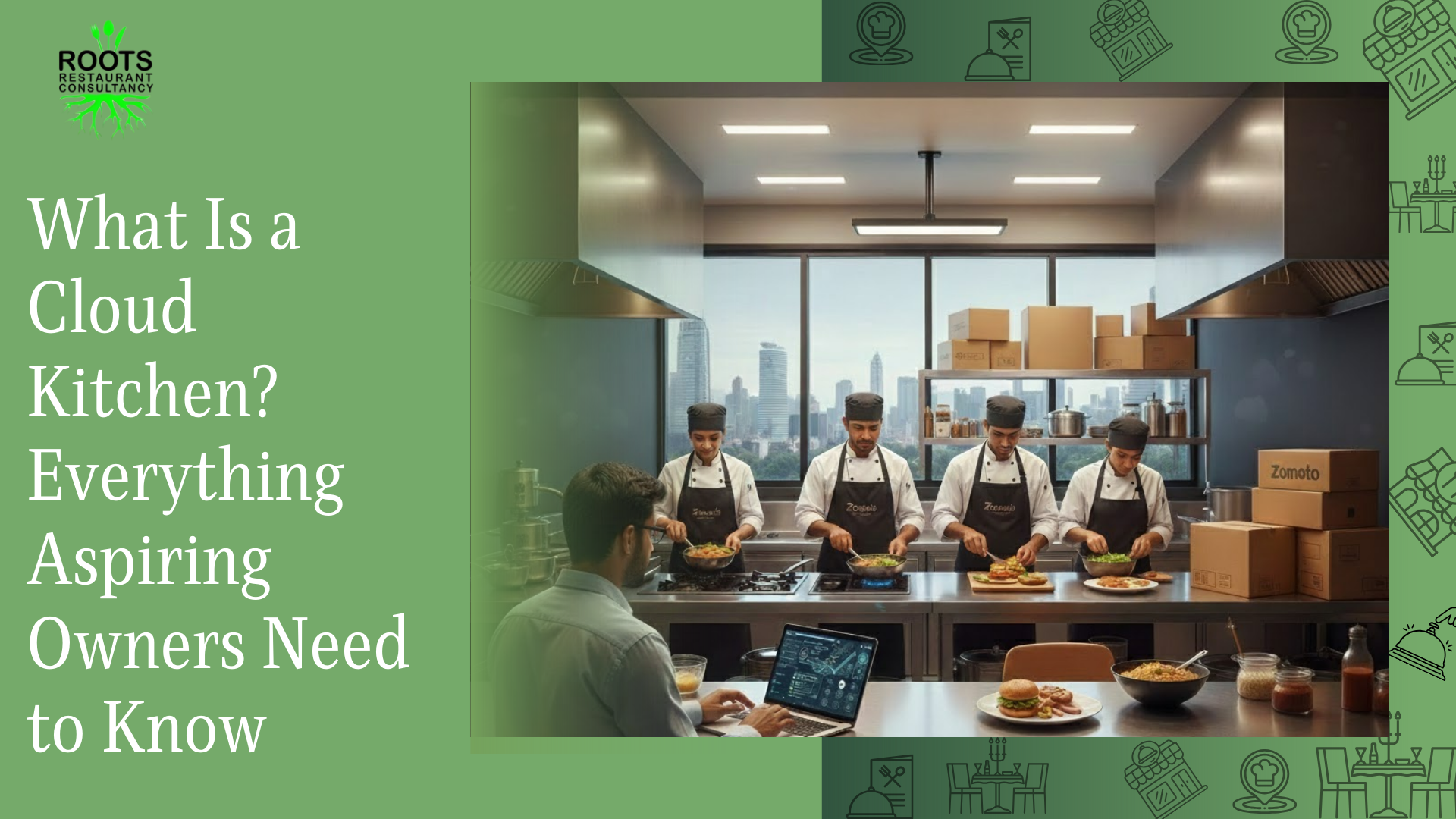
A cloud kitchen is a delivery-only restaurant model where food is prepared in a professional kitchen and delivered to customers exclusively through apps like Swiggy, Zomato, and Dunzo. There is no dine-in seating, no waiters, and minimal physical infrastructure — making it one of the most cost-effective business formats in the industry.
What Is a Cloud Kitchen? A Simple Explanation
A cloud kitchen, also called a ghost kitchen or virtual kitchen, is a food preparation unit that serves customers through delivery platforms instead of dine-in service.
The operation is completely digital:
- Customers order food online
- The kitchen prepares and packages the order
- Delivery partners pick it up and deliver it
This model reduces rent, staffing, and operational costs, making it ideal for both new entrepreneurs and existing restaurant brands looking to expand.
Understanding cloud kitchen helps aspiring owners plan a low-investment, scalable business with strong profit potential.
How Cloud Kitchens Work
To understand what is cloud kitchen in practical terms, here’s the workflow:
- Customer places an order through Swiggy/Zomato
- Kitchen receives order on integrated POS
- Chefs prepare and pack food
- Delivery partner collects the order
- Customer receives order and leaves feedback
The cloud kitchen model is built on efficiency, consistency, and speed — supported by strong backend systems and staff training.
Different Types of Cloud Kitchen Models
Understanding cloud kitchen also means knowing the formats available. The model can be adapted for different budgets and goals.
1. Single-Brand Cloud Kitchen
A basic setup with one cuisine and one brand.
Ideal for first-time entrepreneurs.
2. Multi-Brand Cloud Kitchen
Multiple virtual brands operate from one kitchen.
One team, multiple revenue streams.
3. Co-Working Cloud Kitchen
Shared kitchen space rented on a monthly basis.
Perfect for low-investment setups.
4. Hybrid Cloud Kitchen
Delivery-only kitchen with a small walk-in counter.
Useful in busy residential neighborhoods.
5. Franchise Cloud Kitchen
Entrepreneurs invest in a well-known cloud kitchen brand.
Roots Restaurant Consultancy helps clients choose the right model based on budget, cuisine, skills, and long-term goals.
Explore all services:
https://rootsrestaurantconsultancy.com/services/
Why Cloud Kitchens Are Growing Rapidly in India
Before diving deeper into the concept , it helps to know why this model is booming:
- Lower rental costs
- No need for high-footfall locations
- Reduced staff requirements
- Increasing online food delivery demand
- Easy scalability into multiple brands
- Ability to operate silently without dining interruptions
Cities like Bangalore, Chennai, Pune, and Hyderabad are particularly strong markets due to tech-driven lifestyles and high delivery platform usage.
Step-by-Step Guide: How to Start a Cloud Kitchen
Once you understand the concept, the next question is how to start one. Here is the complete process:
1. Conduct Market Research and Feasibility
Study customer preferences, cuisine demand, and competitor presence.
Roots’ Concept Feasibility Services help identify profitable niches for cloud kitchens.
More details: https://rootsrestaurantconsultancy.com/services/
2. Choose the Right Location
A cloud kitchen doesn’t need a prime commercial area.
Look for areas with:
- High order density
- Easy delivery partner access
- Adequate ventilation and drainage
3. Acquire Necessary Licenses
Even delivery-only restaurants must meet legal requirements.
You will need:
- FSSAI License
- Shop & Establishment License
- GST Registration
- Fire Safety NOC (for gas-based kitchens)
- Trade License
Roots assists with end-to-end FSSAI and licensing setup.
4. Design Your Kitchen Layout
A cloud kitchen must be efficient and ergonomic.
A proper layout includes:
- Storage zone
- Preparation counters
- Cooking zone
- Packaging area
- Dispatch counter
Roots’ kitchen setup experts streamline layout design for maximum speed and hygiene compliance.
5. Procure Equipment and Raw Materials
Start with essential equipment only — avoid oversized or unnecessary machinery.
Typical requirements:
- Prep tables
- Gas range
- Freezers & chillers
- Exhaust & ventilation
- Sealed packaging materials
Roots guides vendors, cost negotiation, and equipment selection.
6. Build Your Menu Strategically
Menu engineering is key to cloud kitchen profitability.
Focus on:
- High-demand items
- High-margin dishes
- Recipes that travel well
- Compact menu sizes
Roots’ menu development services ensure culinary consistency and cost efficiency.
7. Set Up Ordering and POS Technology
Cloud kitchens rely on digital systems:
- POS
- Inventory software
- Kitchen Display System (KDS)
- Aggregator dashboards
Roots helps integrate all operational technology for smooth functioning.
8. Register on Delivery Platforms
Partner with platforms such as:
- Swiggy
- Zomato
- Dunzo
Upload menu, pricing, images, and brand description.
9. Build a Strong Brand Identity
Even without a storefront, branding matters.
Create:
- Brand name & logo
- Packaging identity
- Story-based brand profile
Roots’ branding team builds customer-focused food brands that stand out online.
10. Launch and Monitor Operations
Monitoring and analysis determine long-term success:
- Food cost tracking
- Delivery time monitoring
- Customer feedback
- Menu performance
- Staff productivity
Roots provides monthly operational audits for consistent growth.
Advantages of Cloud Kitchen Businesses
| Advantage | Business Impact |
|---|---|
| Low investment | Faster launch, reduced risk |
| Scalability | Easy expansion into new markets |
| Efficiency | Streamlined operations |
| High margins | Lower overhead costs |
| Customer data | Better decision-making |
Understanding the concept helps entrepreneurs adopt a model built for modern consumer behavior.
Common Challenges for Cloud Kitchens
| Challenge | Impact | Solution |
|---|---|---|
| High aggregator commissions | Lower margins | Build direct ordering website |
| Packaging costs | Revenue reduction | Optimize packaging vendors |
| Maintaining consistency | Customer dissatisfaction | Recipe SOPs + training |
| Lack of visibility | Fewer orders | Digital branding strategies |
Roots Restaurant Consultancy provides expert solutions for all these challenges.
Explore full service list: https://rootsrestaurantconsultancy.com/services/
How Much Does a Cloud Kitchen Cost to Start?
| Category | Estimated Cost (INR) |
|---|---|
| Kitchen Setup | ₹2–₹4 lakhs |
| Licenses | ₹20,000–₹50,000 |
| Initial Inventory | ₹30,000–₹60,000 |
| Branding & Marketing | ₹40,000–₹1 lakh |
| Equipment | ₹1–₹3 lakhs |
Total investment typically ranges between ₹4–₹8 lakhs, depending on city and concept.
Why Choose Roots Restaurant Consultancy
Roots Restaurant Consultancy is India’s top expert in cloud kitchen planning and execution.
Their expertise includes:
- Concept development
- Menu planning
- Kitchen design
- Licensing & compliance
- Brand identity
- Aggregator onboarding
- Staff training
- Operational audits
With over 200+ successful setups, Roots helps entrepreneurs understand not only this setup, but how to run one profitably.
Visit the service page:
https://rootsrestaurantconsultancy.com/services/
FAQs About Cloud Kitchens
1. What is cloud kitchen?
It is a delivery-only kitchen model without dine-in facilities.
2. Are cloud kitchens profitable?
Yes — they operate with lower overheads and higher margins.
3. Can one kitchen run multiple brands?
Yes, this model improves profitability and uses shared resources efficiently.
4. Do cloud kitchens need licenses?
Yes, FSSAI and trade licenses are mandatory.
5. How can Roots help?
Roots provides complete consulting — from concept creation to launch and scaling.